

For years, the conversation around AI and employment has been framed as a conflict — humans versus machines. Replacement versus survival. Automation versus redundancy. That narrative is outdated. In 2026, the defining shift is not elimination — it is augmentation.
It demands:
This transformation gives rise to a new archetype — ‘the augmented professional’.
This transformation is already visible in how enterprises are structured. Traditional hierarchies built on managers, supervisors, and workers are evolving into AI-first teams composed of strategic orchestrators, augmented professionals, and digital AI coworkers. Instead of multiple layers of supervision, organizations are adopting intelligent systems where AI agents manage operational workflows while leaders focus on strategy, innovation, and long-term capability building. Gartner predicts that by the end of 2026, 20% of organizations will use AI to eliminate more than half of middle-management positions — not as a reduction of leadership, but as a shift toward higher-value orchestration. The future enterprise is moving from rigid hierarchies to integrated teams where human judgment and machine intelligence operate as one cohesive system.
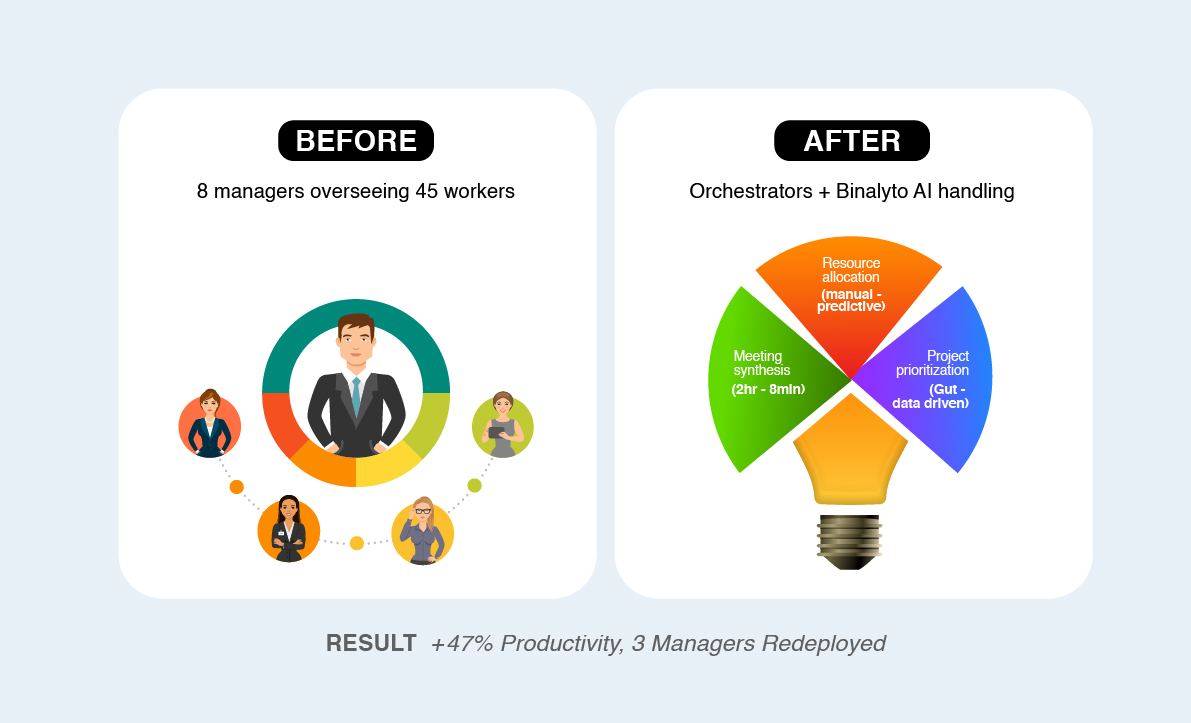
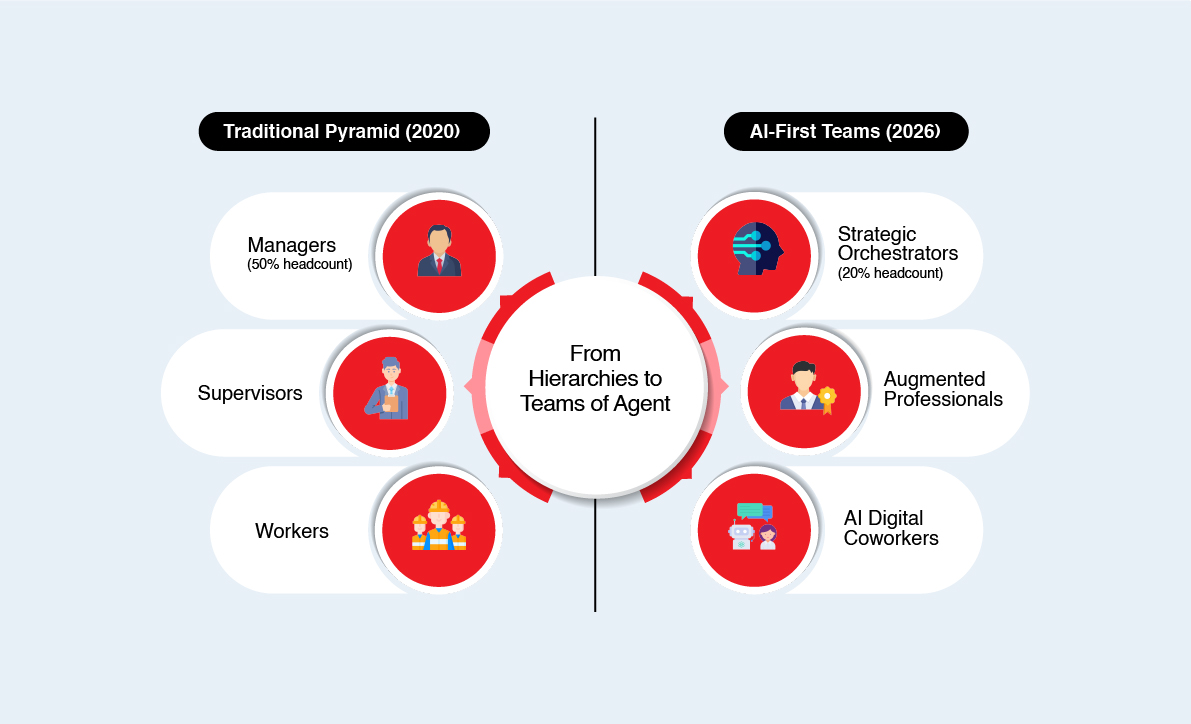
Figure: Kerala Case Study: Calicut Manufacturing
As enterprises restructure around AI-first teams, a new professional archetype is taking shape. In 2026, AI literacy is foundational — comparable to computer literacy in the 1990s. Agentic AI systems now execute complex workflows independently, redefining roles across every level of the organization.

AI copilots are dramatically compressing the learning curve. Early-career professionals can now perform advanced analytical, strategic, and client-facing tasks that once required years of institutional experience. This shift is challenging traditional seniority models and accelerating time-to-impact. Capability is increasingly defined by how effectively individuals leverage AI, not just by tenure.
At the same time, the market is rewarding professionals who combine deep domain expertise — in fields such as law, healthcare, engineering, or finance — with AI fluency, including prompt engineering, model validation, and workflow automation. Organizations report compensation premiums of up to 50% for individuals who can both direct AI systems effectively and critically evaluate their outputs. The modern professional’s value lies not in task execution alone, but in judgment, oversight, and intelligent amplification through AI.
While routine clerical functions continue to decline, a new ecosystem of enterprise roles has emerged:
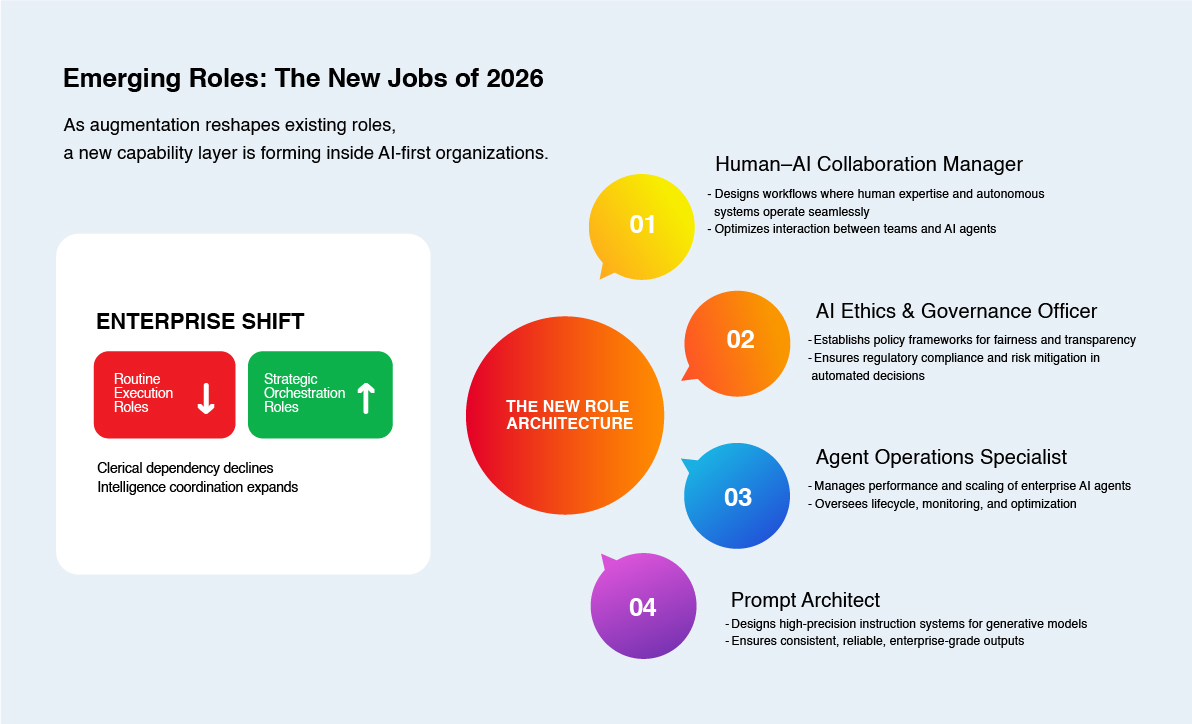
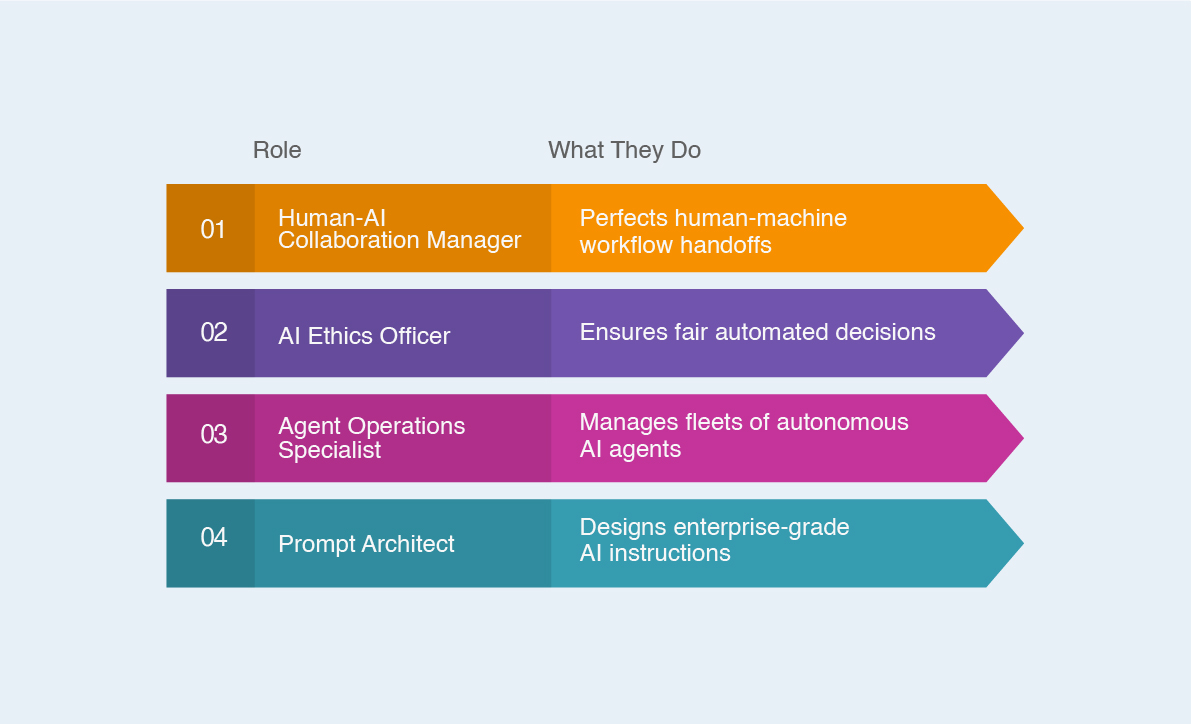
In an AI-driven environment, static job descriptions become obsolete within months. Forward-looking organizations are shifting from role-based hiring to skills-based workforce architecture — designing teams around capabilities and measurable outcomes rather than fixed titles.
Instead of recruiting for roles such as “Marketing Manager,” organizations now define outcome-based capabilities, including:
Talent is aligned to these outcomes through verified skill clusters — independent of legacy titles or rigid reporting structures. This model enables organizational agility, accelerates internal mobility, and strengthens measurable performance alignment.
“Automation scales volume, Humans create value”.
The real opportunity of AI lies not in cost efficiency alone, but in capability reinvestment. Productivity gains generated by AI must be redirected toward:
Machines extend capability.
Humans provide direction, context, and accountability.
The most resilient enterprises in 2026 have mastered what we define as the Human–AI Handshake — the deliberate inflection point within a workflow where:
“This interaction is not accidental, It is intentionally engineered”.
Organizations that architect this coordination layer are outperforming those that simply deploy AI tools without structural redesign
Is your organization prepared to transition from task execution to intelligence orchestration?
Book a Workforce Readiness Audit with Binalyto to map your team’s skills against the future of AI-augmented work.
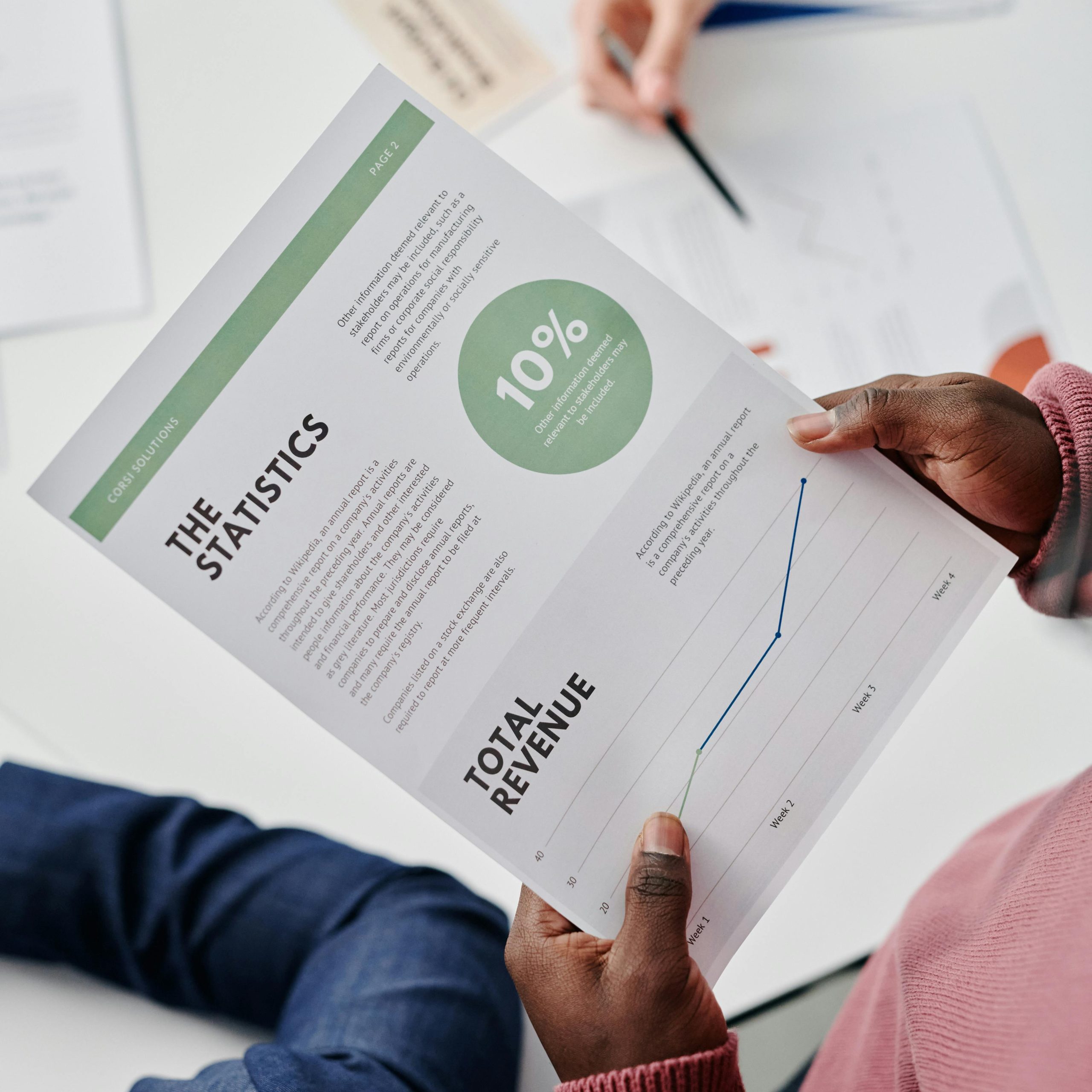
Building a Data-Driven Culture: Tools, Capabilities, and Mindset as Strategic Differentiators
Read More

Operationalizing AI: Governance, Risk, and Scalability in Enterprise Adoption
Read More
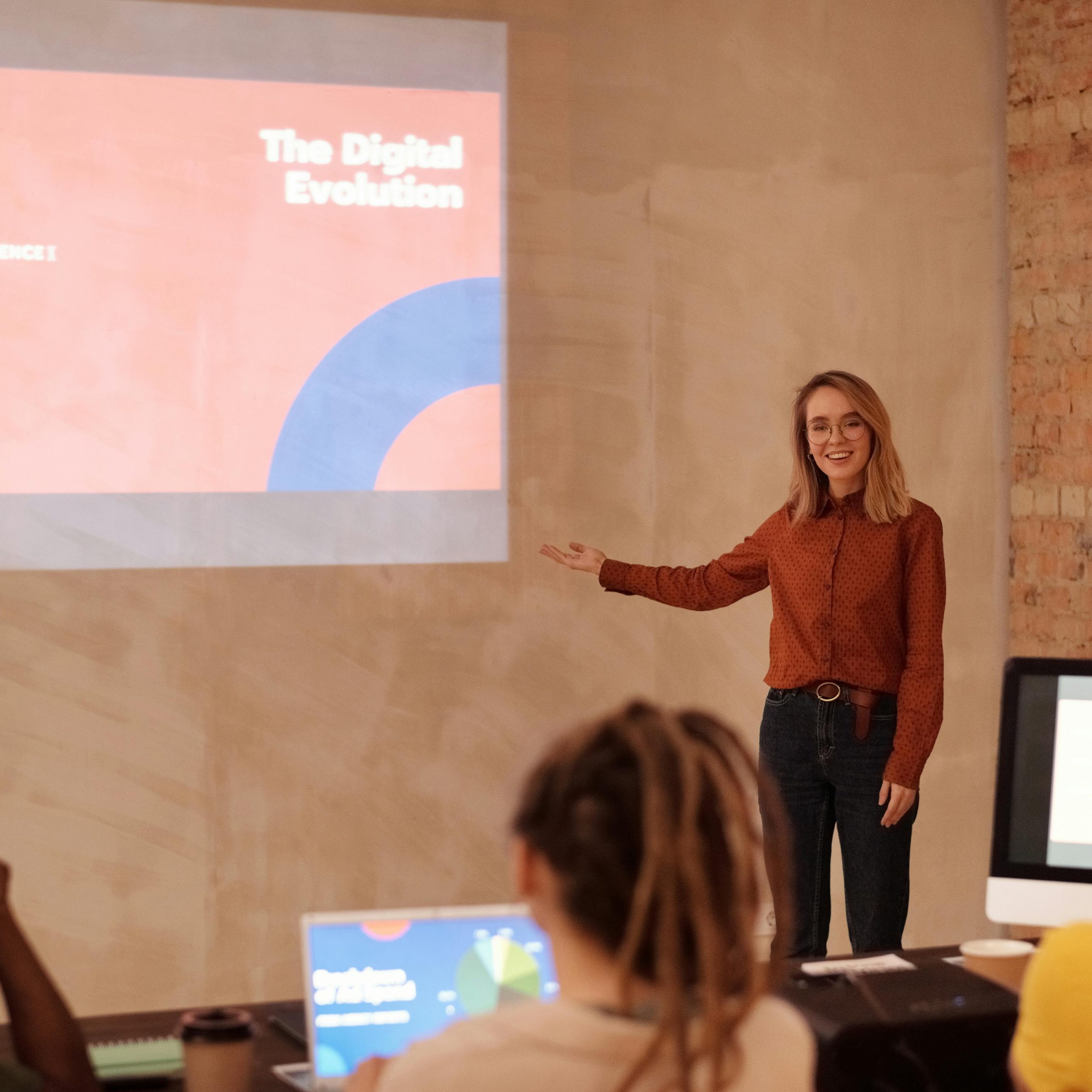
From Data to Decisions: The Enterprise Shift Toward Augmented Analytics
Read More
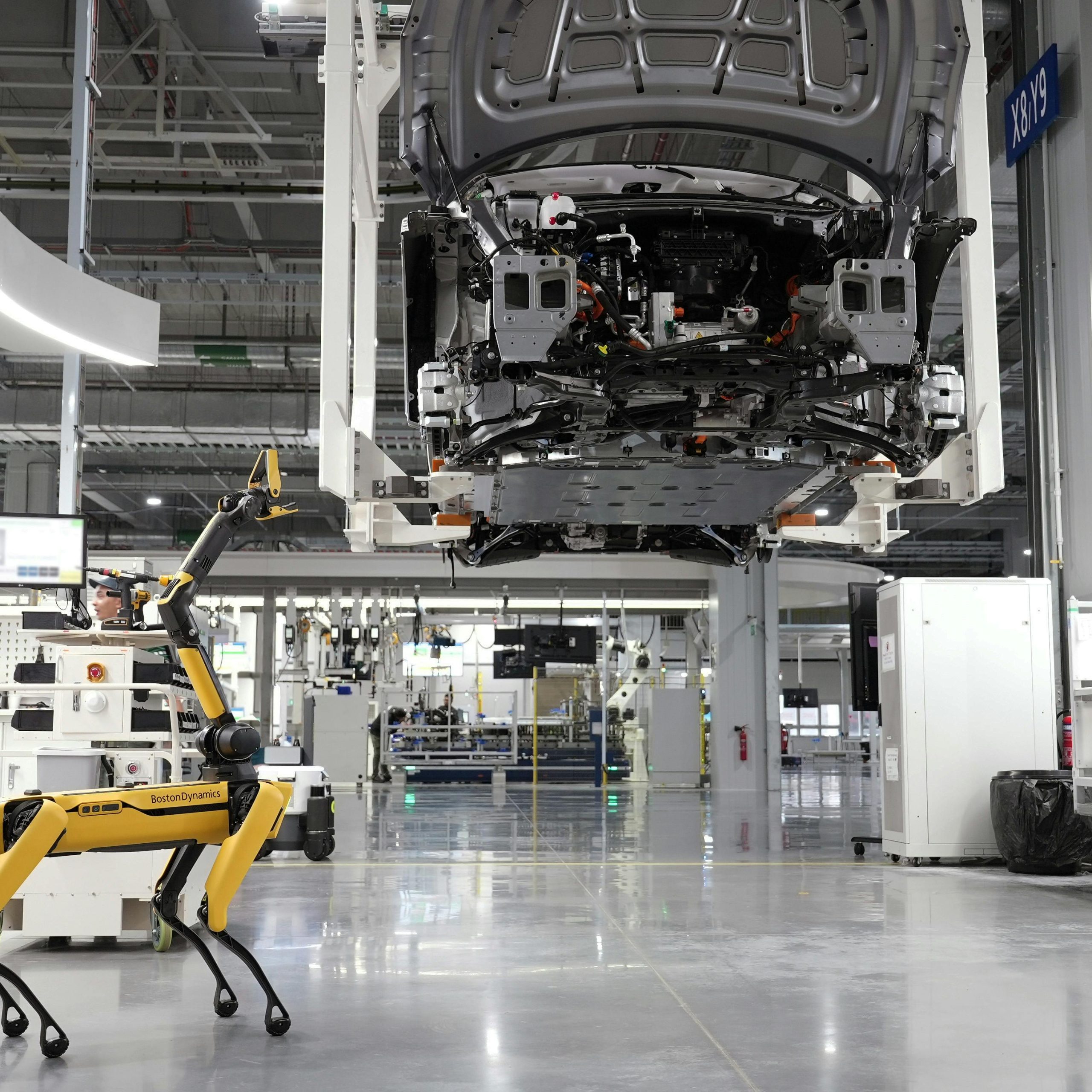
Eyes Everywhere: How Computer Vision Is Redefining Quality Control at Scale
Read More
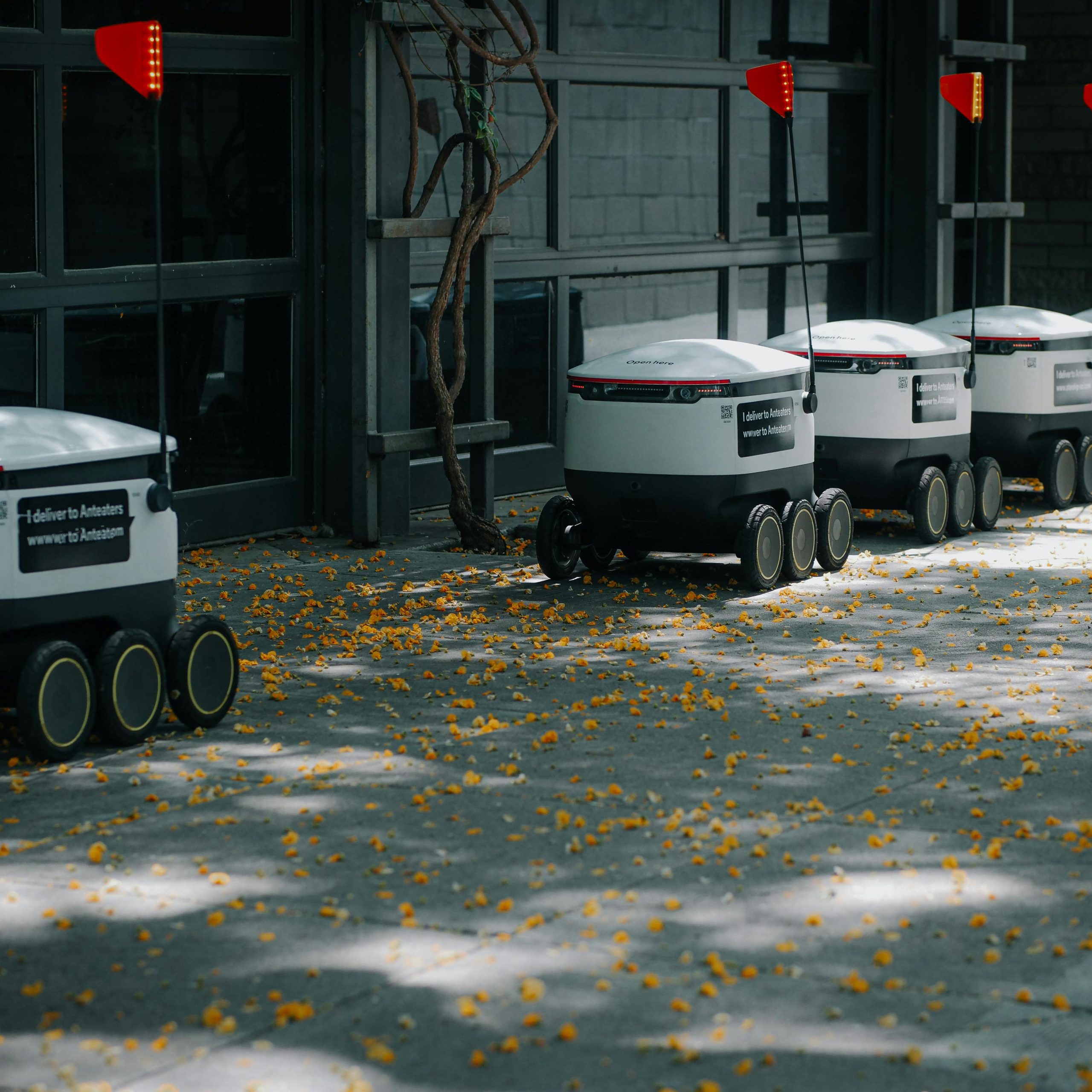
Edge AI and Real-Time Analytics: Architecting Intelligence at the Point of Action
Read More

AI-Driven Personalization: Engineering Customer Experience at Enterprise Scale
Read More

AI & Ethics in Business: Governance, Bias Mitigation, and Enterprise-Grade Responsible AI
Read More

The Business Impact of Predictive Analytics in Supply Chain and Logistics
Read More

Beyond the Prompt: How Generative AI Is Redefining Enterprise Creativity and Innovation
Read More

The Future of Work: AI-Augmented Roles and Enterprise Workforce Transformation
Read More
With over a decade of enterprise expertise, we deliver performance-driven solutions powered by intelligent innovation. Partner with us to scale smarter, operate stronger, and lead with measurable impact.
Request a Demo

©2026 Binalyto Pvt Ltd.