

Across industries, the “Proof of Concept” graveyard is expanding. Brilliant AI models demonstrate exceptional results in controlled environments — yet fail to transition into production-grade systems.
In 2026, the gap between experimental validation and enterprise deployment has become one of the most significant challenges in digital transformation.
At Binalyto, we focus on closing that gap. Operationalizing AI — often framed within MLOps or AI Operations — is not simply a technical exercise. It is an architectural, governance, and risk management discipline. Production AI is not a demo. It is infrastructure.
Deploying AI into mission-critical systems introduces material operational and reputational risk. A flawed recommendation, hallucinated response, or biased decision can disrupt supply chains, financial workflows, or customer trust.
Modern enterprises mitigate deployment risk through controlled rollout strategies:
New models are exposed to a limited subset of users (e.g., 5%) while performance is benchmarked against an established baseline. Only after validated stability does the rollout scale.
The new model operates in parallel with the existing system, generating “invisible” outputs that are compared to live decisions or expert judgment. This enables rigorous validation without operational disruption.
Two identical production environments run concurrently. The new model is deployed to the “green” environment while “blue” remains live. Instant rollback capability ensures continuity if anomalies are detected.
These strategies shift AI deployment from high-risk transformation to controlled evolution.

Deployment shifts from high-risk transformation to controlled evolution.
As AI systems become increasingly autonomous and agentic, governance becomes foundational rather than optional. Enterprises must ensure every automated decision is traceable, auditable, and attributable.
Every production model requires comprehensive traceability: version history, training dataset provenance, hyperparameter configurations, and prompt dependencies. Decision reproducibility is essential for regulatory defense and internal accountability.
A unified inventory of all enterprise AI assets — including sanctioned and unsanctioned (“shadow”) deployments — creates visibility across business units. This registry becomes the control plane for oversight and lifecycle management.
Compliance requirements are embedded directly into CI/CD pipelines. For example:

Fig: Enterprise Governance Architecture
In regulated industries, “The AI decided” is not a defensible position. Explainable AI (XAI) provides transparency into both individual decisions and systemic logic.
Clarify why a specific outcome occurred — for example, why a loan application was declined or why a claim was flagged for review.
Provide insight into overall model behavior, including dominant decision pathways and systemic weighting structures.
Visual and statistical tools identify which variables most influenced outcomes, enabling internal review and bias detection. Explainability is not only about compliance. It is fundamental to stakeholder trust.
Production AI systems operate in dynamic environments. Risk management must address both model degradation and adversarial manipulation.

Resilience must be engineered before disruption occurs.
Research environments prioritize novelty and performance benchmarks. Enterprise environments prioritize predictability, auditability, and stability.
A production-grade AI system must:
AI in production is not a static deliverable — it is a living system requiring ongoing observability and lifecycle management.
At Binalyto, we approach AI operationalization as a full-stack transformation — spanning deployment architecture, governance frameworks, monitoring infrastructure, and organizational readiness.
The goal is not merely to deploy models.
The goal is to institutionalize AI as a dependable, scalable enterprise capability.
An AI system in production must have:
Without these controls, innovation introduces unmanaged risk.
Is your AI initiative still confined to the lab?
Partner with Binalyto to design and implement an enterprise-grade MLOps framework that transforms experimental models into resilient, high-scale business assets.

Building a Data-Driven Culture: Tools, Capabilities, and Mindset as Strategic Differentiators
Read More

Operationalizing AI: Governance, Risk, and Scalability in Enterprise Adoption
Read More

From Data to Decisions: The Enterprise Shift Toward Augmented Analytics
Read More
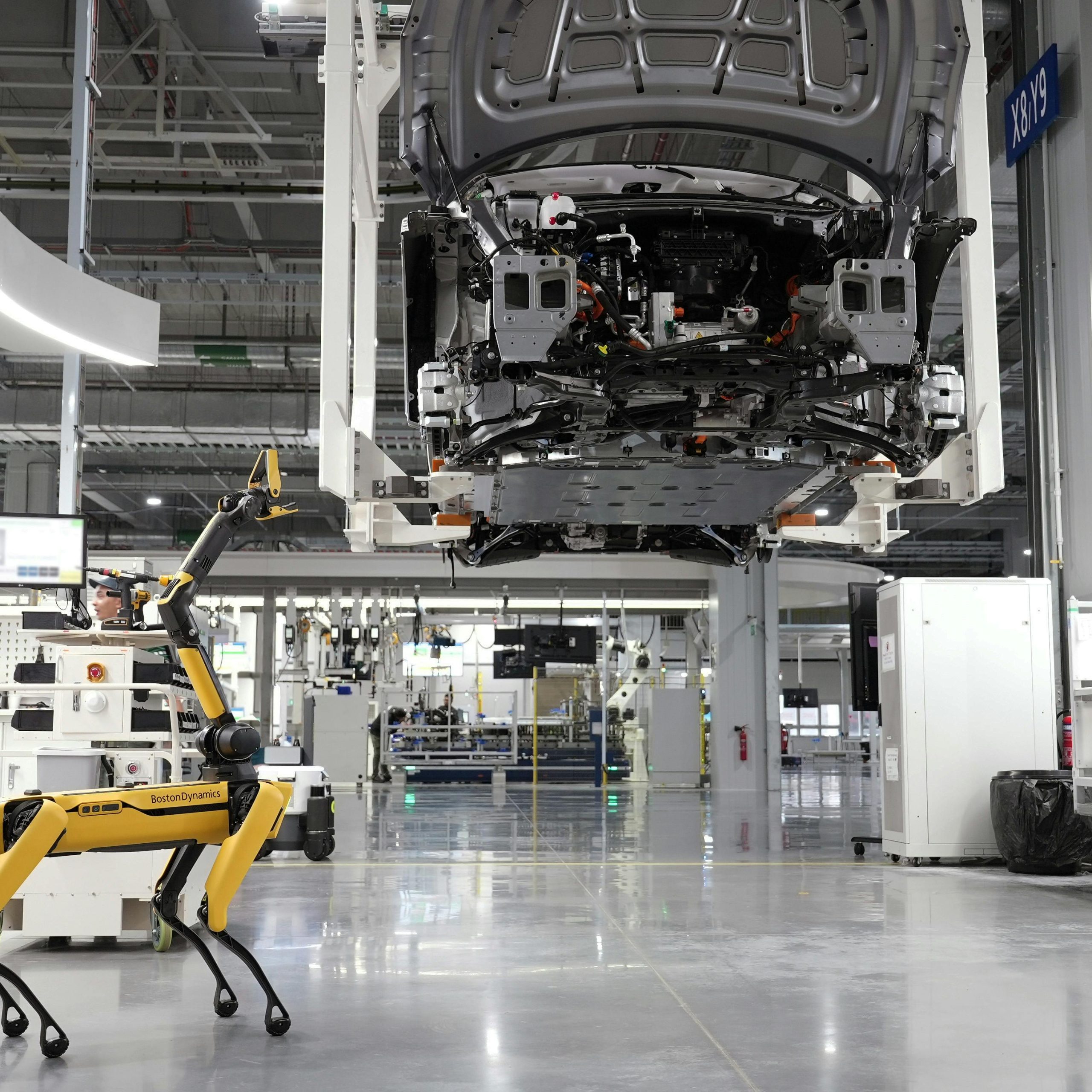
Eyes Everywhere: How Computer Vision Is Redefining Quality Control at Scale
Read More

Edge AI and Real-Time Analytics: Architecting Intelligence at the Point of Action
Read More

AI-Driven Personalization: Engineering Customer Experience at Enterprise Scale
Read More

AI & Ethics in Business: Governance, Bias Mitigation, and Enterprise-Grade Responsible AI
Read More

The Business Impact of Predictive Analytics in Supply Chain and Logistics
Read More

Beyond the Prompt: How Generative AI Is Redefining Enterprise Creativity and Innovation
Read More

The Future of Work: AI-Augmented Roles and Enterprise Workforce Transformation
Read More
With over a decade of enterprise expertise, we deliver performance-driven solutions powered by intelligent innovation. Partner with us to scale smarter, operate stronger, and lead with measurable impact.
Request a Demo

©2026 BINALYTO DATA SERVICES PRIVATE LIMITED